RIDING THE ROLLERCOASTER: HOW ARTISTS SURVIVE THE MUSIC INDUSTRY TO BECOME THE LEGENDS WE LOVE. MAY 12 2026.
RIDING THE ROLLERCOASTER: HOW ARTISTS SURVIVE THE MUSIC INDUSTRY TO BECOME THE LEGENDS WE LOVE. MAY 12 2026.
AUTUMN 2026 EVENTS
More coming soon…
ABOUT RIDING THE ROLLERCOASTER
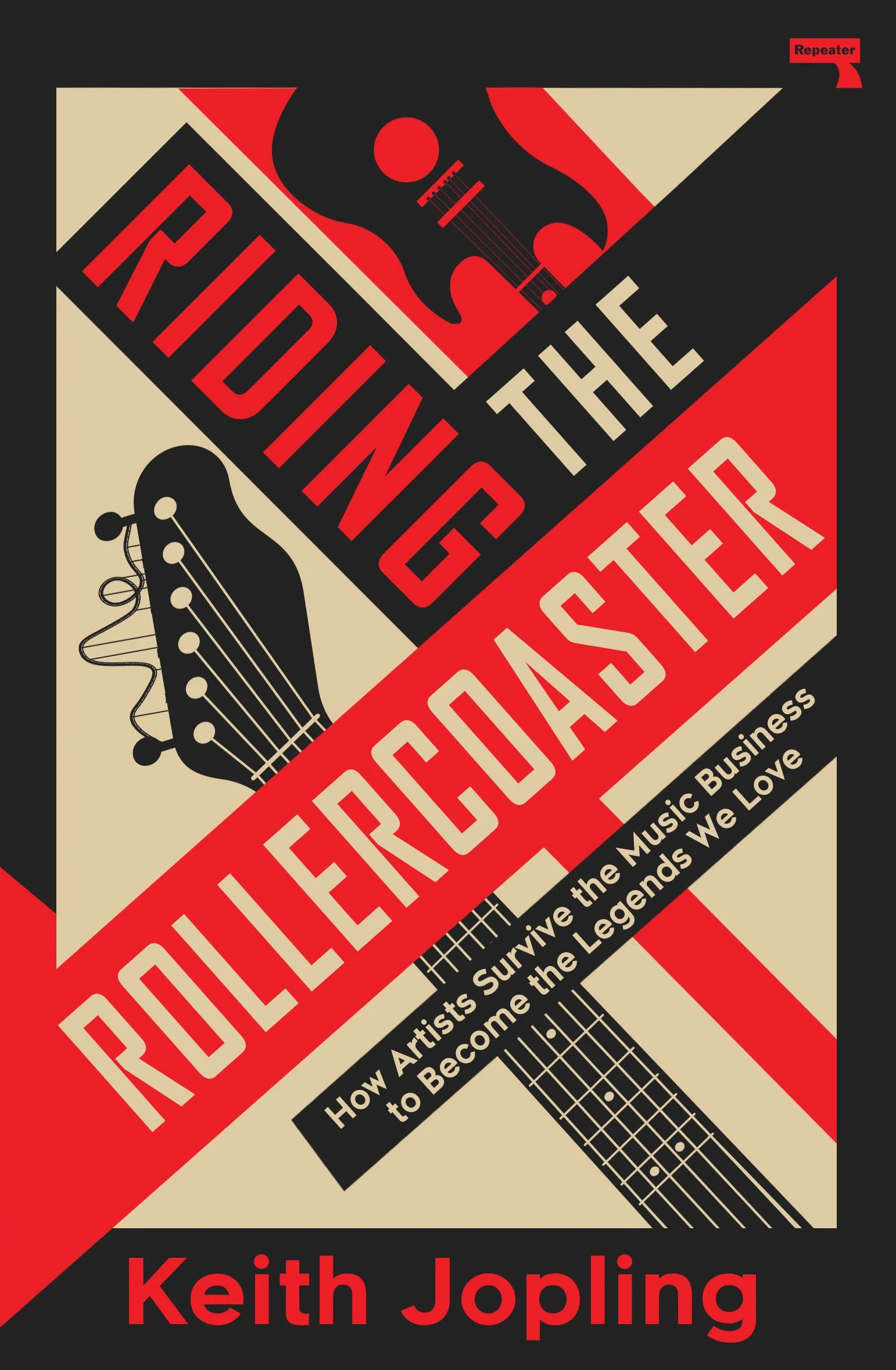
Stories of how artists and bands carved out long and successful careers in the music business, despite the numerous pitfalls and pratfalls.
Riding the Rollercoaster gives a unique insider perspective as to how the music business really works – or doesn’t – and how the best bands have survived and thrived. With inspiration from in-depth interviews on The Art of Longevity podcast with 70 artists, including Tears For Fears, Norah Jones, The Waterboys, My Morning Jacket, James, Rickie Lee Jones, Interpol, The Lumineers, David Gray, KT Tunstall, Ben Folds, Suzanne Vega, Keane, Crowded House, David Gray, John Grant, Nile Rodgers and many more, the book is about how established, famous and renowned musicians and bands have managed to carve 20, 30, even 50-year careers making music in an industry notorious for being fickle and obsessed with the new.
They have been dropped by labels, lost band members, had hits and misses, broken-up and reformed, but somehow crossed the rubicon and made it through ‘to the other side’ to have successful independent careers and make some of their best ever songs and albums. The book takes a wider lens to the music industry and explores why artists are not respected enough, despite being the central providers to a growing music industry worth $100 billion a year. Will this ever change?
“Keith has a line about artist’s real careers being their time after the limelight, cultivating a world of loyal fans, with viable touring and modest record sales. This is something that hardly ever gets talked about but Keith understands that this is what success can actually look like and exposes the myriad ways of achieving it in this amazing book.”
Olly Knights, singer, Turin Brakes
“If the music industry had a survival manual, riding the Rollercoaster could well be it. The book beats around the eternal struggle every artist faces, the battle between creative integrity and commercial pressure. But the book’s greatest strength is its ability to categorise the distinct stages of a career by drawing on the experiences of legendary artists who have successfully navigated these waters. Keith’s insights serve as a necessary reality check. He argues that understanding the mechanics of the "rollercoaster" doesn't kill the magic of the art; it's what allows the artist to stay on the ride for longer.”
Rob Sealy, Co-founder, Openstage
"Keith Jopling’s Riding the Rollercoaster is an essential, clear-eyed guide to the realities of today’s music industry. Drawing on deep experience and sharp insight, Keith captures both the volatility and the opportunity artists face, offering perspective that feels as honest as it is useful. This is a book that informs, reassures, and ultimately empowers anyone navigating the modern music landscape."
David Martin, CEO Featured Artists Coalition
“Anyone building in music should read this. Jopling cuts through the noise and lets seventy artists who actually lived it tell the truth about survival. The most useful book on the modern music business in years.”
Sven Ahrens, ex-CEO Yousician, ex-Spotify Head of International Markets
“The music industry marks success by chart position, streaming counts, awards or social media stats. To music industry executives, success means commercial success. Yet artists are rarely nourished by numbers, nor are they motivated by money. They receive affirmation through hearing stories of how fans connect with their music. They enjoy seeing the reactions of the crowd at shows. They are delighted when their quieter songs end up ranking high on streaming services alongside their hits. What motivates the business side and artistic side of the business are chalk and cheese. But they must work symbiotically”.
BOOK LAUNCH GALLERY
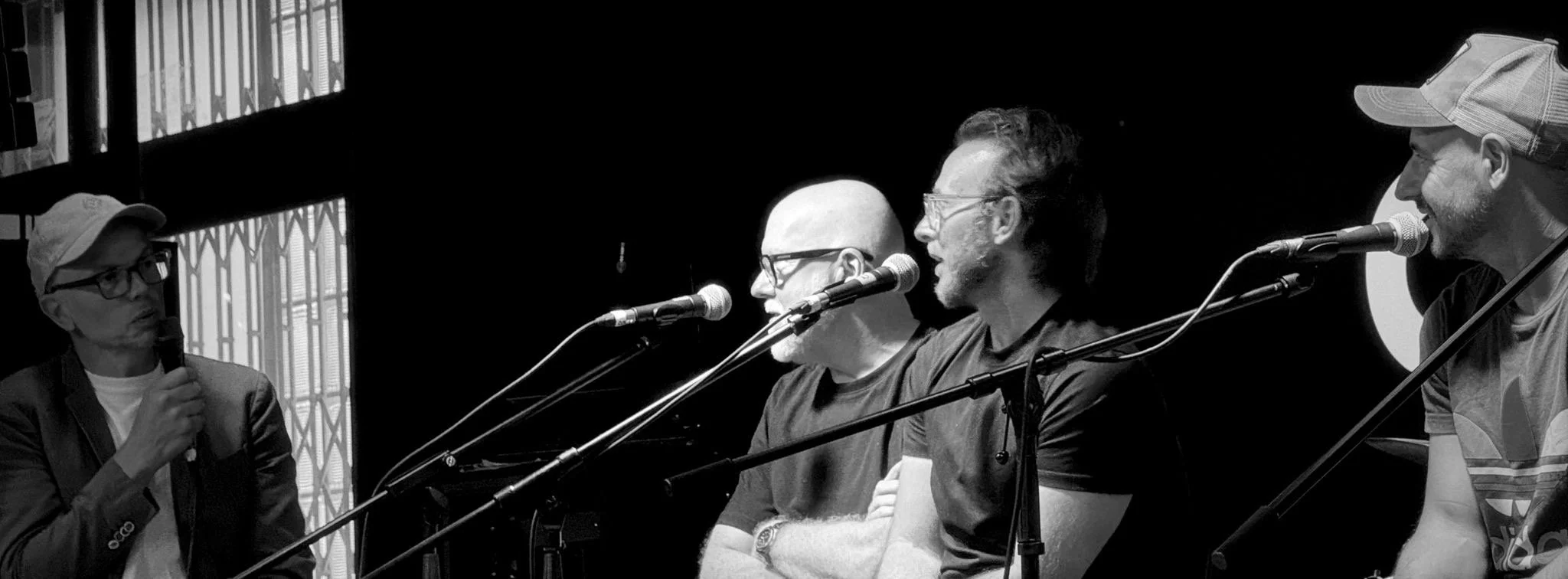
SEPT 15TH. house of koko, camden. berenice, alex brees and Keith got together to talk Riding The Rollercoaster. See the gallery here.

SEPT 6TH. BOURNE & HOLLINGSWORTH, FARRINGDON. FLYTE and Keith got together to talk Riding The Rollercoaster. See the gallery here.
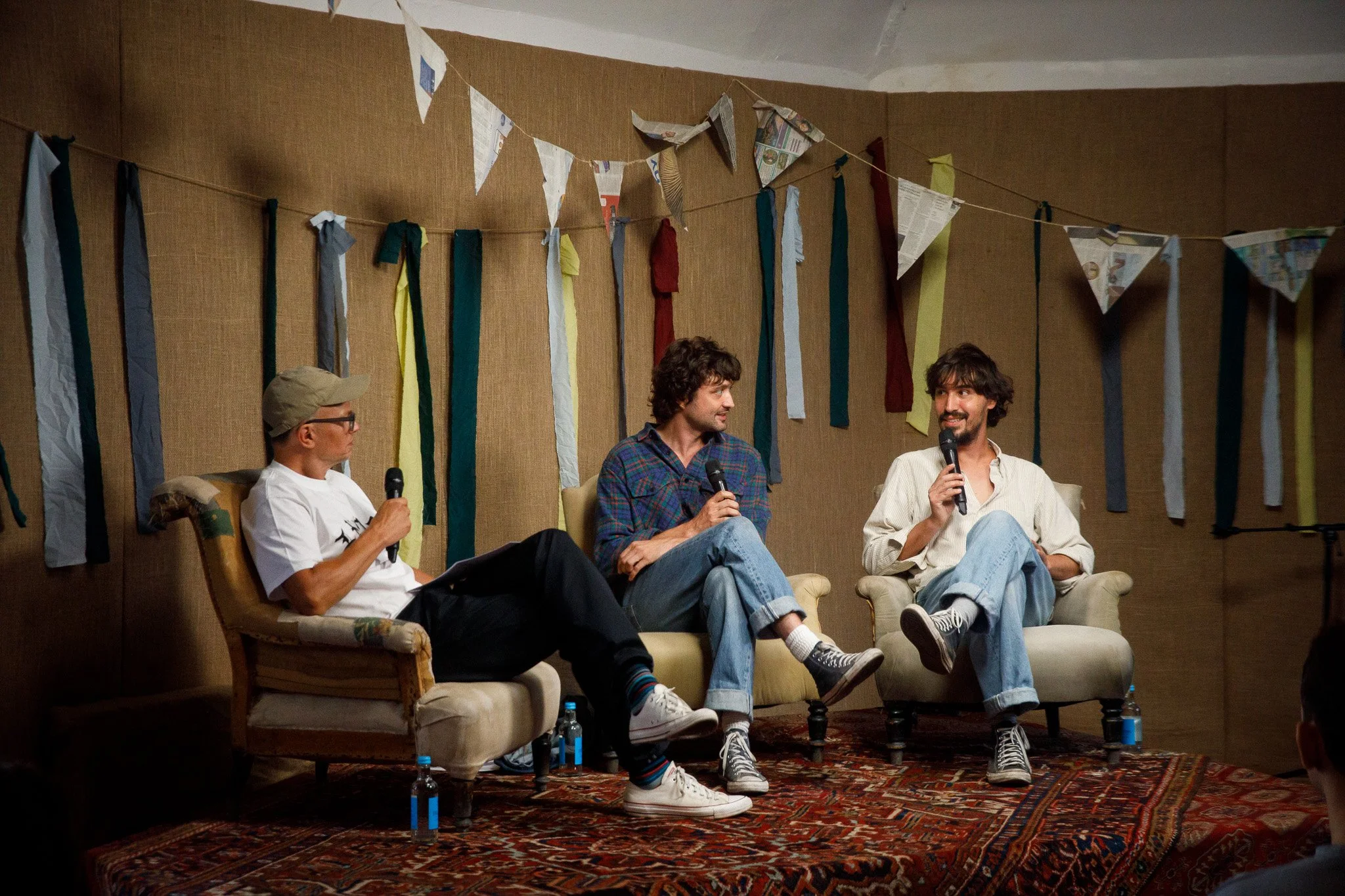
May 28th. Cambridge Audio London Bridge. Turin Brakes and Keith got together to talk Riding The Rollercoaster. See the gallery here.
PREVIEWS & REVIEWS
“Riding the Rollercoaster is a unique analysis of the reality behind the curtain of the modern music scene. If you have any interest in keeping your music dream alive then this book is indispensable.”
Rob Allum, drummer, de-facto manager, Turin Brakes
“On the face of it, this book is full of rules, whereas we know that rules are made to be broken and creativity is an art, not a science. Jopling realises this, though. These are pointers, suggestions, observations and experiences, not absolutes, written in such an accessible way that you can take 'Riding The Rollercoaster' as either a self help book, or as an entertaining series of rock life stories built around a theme. Either way, it will help those that need it to navigate the many bear traps and pitfalls waiting in this most insecure, yet rewarding of all careers.”
Outsideleft magazine
"If Rick Rubin’s 'The Creative Act' speaks to the spiritual spark of making art, Keith Jopling’s 'Riding the Rollercoaster' speaks to what comes next -- how artists carry that spark through systems, cycles, expectations, collapses and the long work of building a life in music."
Michael Pelczynski, Voice-Swap, Ivors Academy
“Riding The Rollercoaster is written with self-evident love for music - and musicians - to unpeel the secrets of how artists best develop long and sustainable careers in music. Keith Jopling draws on the insights gained from his acclaimed podcast series ‘The Art of Longevity’ coupled with his own experience at the highest levels of the music industry to deliver an essential primer for fans and artists alike.”
Steve Redmond
the review essay
The Music Business Loves a Breakthrough. Artists Have to Survive One.
In “Riding the Rollercoaster,” Keith Jopling follows bands and solo artists through the hits, humiliations, comebacks, and quiet victories that make a career last.
By Demetris Papadimitropoulos | May 6th, 2026, on goodreads
An empty club stage after the applause in “Riding the Rollercoaster” – one guitar, one microphone, and one red diagonal of pressure holding the long work of artistic survival in the quiet after fame has left the room.
The test that undoes people in a music career is rarely the breakthrough. Breakthrough is the loud part. It is camera-ready and suspiciously overstaffed: the label people beam, the journalists discover adjectives, the old friends say they always knew, and the artist is suddenly expected to behave as if the campaign machine were fate.
Keith Jopling’s “Riding the Rollercoaster” is drawn to the invoice, psychic and practical, that arrives afterward. The label stops calling. The press moves on. The old hit remains pinned to the top of the streaming profile like a commemorative plaque and a mild accusation. The new songs arrive, carrying all the dignity of new songs, only to be asked whether they resemble the old ones.
This is the weather after the spotlight has cooled and the room has thinned: older choruses, fresh doubts, fewer people pretending to know the plan. “Riding the Rollercoaster” presents itself as a book about how artists survive label logic, platform appetite, and the old hit’s long arm, but it works best as a study of what happens after the business has filed them away under industry shorthand: priority artist, one-hit wonder, cult concern, difficult act, heritage band, legacy artist.
Breakthrough is not the prize. It is the distorting weather. Longevity is the art of moving through that weather without becoming your own tribute act.
Jopling opens with Turin Brakes, a shrewd choice because they are modest enough to clarify the problem. They are not a monument, not a franchise, not a stadium myth with lawyers attached. Around the release of “Dark on Fire,” they were caught in the churn of EMI’s disastrous Terra Firma period. The record did not become the record everyone needed it to become. The band was dropped by its label, management, and booking agent. The first drama of the book is therefore not triumph but a career vanishing act, performed without consent.
The Thrills supply the counterfactual: another band with early promise and major-label heat, another brush with the machine, another outcome. They did not make it through the same kind of collapse. Many artists are talented. Many are briefly loved. Many are once backed by powerful rooms full of people with laminate passes. Very few last.
From that opening miniature, “Riding the Rollercoaster” stacks its case. Part 1 diagnoses the old crooked bargain: musicians make the meal while labels, platforms, publishers, managers, promoters, media, and the rest of the well-dressed barnacles sell the restaurant. The maker of the music remains unusually exposed, underpaid, and overburdened. Jopling is especially sharp on the unpaid annex to the modern artist’s job description. The musician must now be songwriter, performer, videographer, influencer, strategist, confessor, merch table, wellness risk, and lightly caffeinated content hydrant. The pre-streaming bargain was never exactly tender, but the playlist age has made the contradiction more visible: the business fattens while the person who made the song scrambles.
Part 2 gives the book its sturdiest architecture: five routes to longevity. An artist may have a hit record, get dropped by a label, make a classic album, achieve cult status – renamed here, more generously, as “quiet legend” – or turn the band into a brand, styled by Jopling as “bRand.” The typography is a little cute; the idea is not. Each route has a paradox sharp enough to matter. A hit may liberate and trap. A label may wound an artist by dropping them and accidentally give them back their nerve. An album may be commercially battered by playlists and still remain the form in which artists imagine ambition. Cult status, once treated as the polite word for commercial disappointment, may be one of the sturdiest ways to live. Branding, when it is not merely cynical, becomes a way of making a room fans want to return to: font, color, stage clothes, politics, visual mythology, fan club, small republic with a merch table.
Part 3 turns these routes into twenty lessons grouped under manifesto, craft, and expectation management. Here the book becomes more handbook than inquiry. Jopling encourages artists to define success for themselves, get very good live, build internal codes, hold songs back, trust the studio team, make songs a little weird, take time, and believe that the best work may still be ahead. The afterwords move from archive to forecast: The Cure becomes a model of late return, while Fontaines D.C., Wolf Alice, The 1975, Sam Fender, and Nothing but Thieves become auditions for the future of British and Irish rock. The appendix adds shorter sketches of Gary Numan, James, Nada Surf, and Maximo Park. The result is a road atlas for staying audible: bad van routes, lucky accidents, stubborn crowds.
The routes work because they refuse the industry’s favorite lullaby: success has one shape, and it arrives wearing a chart position. “Have a hit record” is the obvious route, and Jopling is alert to its small cruelty. The song that opens the door may also become the doorstop. “Get dropped by your record label” is the sharper chapter, because it turns rejection into possible ignition. Embrace is the key example: a band dropped after early success returns with “Out of Nothing,” a bigger commercial achievement than the label had managed to produce for them. Laura Veirs, Spoon, The Wombats, Eels, and others join the same pattern. The point is not that labels are useless. Jopling is more careful than that. He praises long label relationships too, including Norah Jones with Blue Note, Arctic Monkeys with Domino, Björk with One Little Independent, and The National with 4AD. The better claim is that label logic is frequently bad at distinguishing a temporary dip from a catalogue that still draws breath.
The book’s finest act of renaming is “quiet legend,” a phrase for something music fans have long known in their bones: not every durable artist needs mass saturation. Tindersticks, Teenage Fanclub, Calexico, Metric, Half Moon Run, and Mogwai are not treated as almost-famous casualties. They are treated as builders of rooms listeners keep reentering. Their audiences may be smaller, but they are not inert. They travel, buy, argue, sing, remember, and make the artist’s continuing life possible. In this account, cult status is not second prize. It is an economy of return visits.
Here the book is most persuasive. Jopling restores dignity to the maintenance years no one frames for the lobby. Most music books know what to do with the spark: the first record, the first tour, the wild ascent, the flashbulb, the collapse. Fewer know what to do with the fifth album after the hit, the tour that is not glamorous but works, the record made after the press has already filed the artist under “used to,” the crowd that does not trend but does show up. Jopling is at his most convincing when he argues that legend is not made only by ignition. It is made by repair, repetition, adjustment, stubbornness, and the curious bravery of continuing to make new work under the long echo of work people already love.
His prose is brisk, accessible, metaphor-rich, and enjoyably exasperated. He writes as fan, interviewer, and industry watcher, not as a coroner with a backstage pass. The recurring images do much of the thinking: rollercoaster, Stations of the Cross, Rubicon, mangle, pedestal, scrapheap, bandwagon, goose laying golden eggs. These metaphors could have become cute if he had not chosen images with pressure in them. They involve ascent, crossing, squeezing, falling, hauling, exposure, repair. Music careers in this book are not tidy upward arrows. They are bodily ordeals with ticketing fees.
The prose has an almost verse-chorus rhythm of example and lesson. Jopling introduces an artist, identifies the career pressure, pulls out the lesson, then moves on before the green room has cooled. At its best, this gives the book movement and range. KT Tunstall and Norah Jones manage the burden of huge early albums. Duran Duran return as older, smarter custodians of their own glamour. Nick Cave rises slowly into wider reverence without seeming to chase it. Kylie Minogue turns pop survival into a sequence of elegant reentries. The Coral and OMD defend the album as a vessel of seriousness. Interpol, Deftones, Ramones, and My Morning Jacket show how identity, aesthetics, and fan communities can extend a career beyond release cycles.
The method starts to fray when the examples arrive like names on a festival poster, jostling for stage time. The twenty lessons, while practical, are less surprising than the five routes. “Take your time,” “define your own version of success,” and “believe your best work is ahead of you” are all humane and sensible.
They are also advice one can imagine printed on a conference tote bag, probably canvas. The book comes alive when it discovers a contradiction. It is less electric when it files a principle.
A larger problem remains: the sympathy is deep, but the pressure is not always evenly applied. Jopling is movingly alert to artists as workers, makers, leaders, and emotional companions, but the category of “artist” can still become too broad. Longevity does not cost the same for everyone. Race, gender, class, genre, geography, age, parenthood, health, disability, and inherited money all shape who gets to survive long enough to be called resilient. A band with savings, childcare, family money, health, and access to influential collaborators is not riding the same rollercoaster as an artist asked to self-finance dignity from the cheap seats. The tracks may cross; the ticket price differs.
Even so, “Riding the Rollercoaster” keeps clear moral pressure on the business side. It is not a pamphlet against labels, streaming, or the surrounding machinery. Jopling knows that managers, producers, labels, publishers, and promoters can be necessary collaborators. He also knows that artists often want an audience, and that pretending otherwise is its own small vanity. His exasperation lands because he does not imagine purity as a business plan. He asks for a fairer bargain: more patience from labels, more perspective from artists, more active care from fans, more respect for albums, more room for the slow burn, and less obedience to numbers that mistake flare-ups for lasting attachment.
The pressure around the book is hard to miss, and Jopling is best when he keeps it near the people onstage. Streaming has made recorded music feel infinite, while intensifying the struggle to be noticed. Catalogue music competes with new songs in a single eternal shop where the shelves rearrange themselves by algorithmic mood. Artists are told to release more, post more, tease more, tour more, reveal more, and somehow remain mysterious enough to be interesting. AI hovers over the book as both threat and insult: an industrial dream of music without musicians, vibes without bodies, songs without anyone having had to wait, grieve, rehearse, fail, or stand in a small room playing to twelve people and a bartender who is not persuaded.
This is where the book’s occasional sentimentality becomes defensible. Jopling believes in artists with plain faith. Bands are “miracles” to him, and solo artists “forces of nature.” One might wince at those phrases in the wrong hands, but he usually earns them because he keeps returning to the labor behind the halo. The miracle of a band is not that several people look good in the same photograph. It is that several people with incompatible sleep patterns, anxieties, vanities, tastes, partners, debts, and ideas about snare sound manage to keep making something together for decades. If that is not a miracle, it is at least a logistical marvel with choruses.
The most helpful comparisons clarify the book without pinning it down. It has some of the post-fame sympathy of “Exit Stage Left” by Nick Duerden, though Jopling is less profile-driven and more systematic; it brushes against the streaming critique of “Mood Machine” by Liz Pelly, though it is less investigative and more written with artists within earshot; and it shares with “How Music Works” by David Byrne an interest in the practical conditions under which music is made, heard, sold, and sustained. Jopling’s focus is narrower than Byrne’s: not how music works, exactly, but how musicians keep working after the machinery has tried to define the terms.
Most movingly, Jopling understands that songs are useful. Not useful as content, brand assets, or sync bait, but useful in the older, stranger sense: a song can become a theme tune, a talisman, a private medicine, the thing a listener plays through grief, illness, divorce, recovery, bad weather, worse dating, or Tuesday. This is why the fan-facing passages matter. Jopling treats fans not as consumers sprinkled at the end of the value chain, but as co-sustainers of artistic life. Buy the album, go to the show, join the fan club, tell a friend. In the wrong register, this could sound like merch-table pleading. Here it reads more like civic instruction for the small city that forms around an artist and keeps the lights on.
The ending asks who gets to become a legend now. The Cure’s return suggests that absence is not the same as disappearance; a band can hold cultural charge in reserve, then reappear when time, influence, audience, and appetite converge. The speculation about future rock legends is less controlled, and sometimes feels like a conversation overheard after a very informed pub quiz, but it extends the question in a useful way. Staying power is not only a matter of an artist’s stamina. It depends on whether the business, critics, platforms, and fans still know how to let artists grow.
That is what “Riding the Rollercoaster” is really about. Not fame. Not hits. Not survival as slogan. It is about what happens when the first dream has been revised by invoices, algorithms, band meetings, market fog, illness, boredom, loyalty, and time. A career is an album cycle, a bad deal, the right producer, a lost member, a loyal crowd, a new song nobody expected, a festival slot, a fan letter, a reissue, a van, a spreadsheet, a myth. Also a small room with bad sightlines. Also a comeback nobody calls a comeback until the room is full.
I would rate “Riding the Rollercoaster” 82/100, which translates to 4/5 stars under a whole-star Goodreads scale. It is strong, generous, and intelligently organized – not a masterpiece, but a sturdy guide to the afterlife of ambition.
Its finest reversal is that the rollercoaster itself may not be the thing artists are trying to survive. The real test comes afterward, when the ride has emptied out, the lights are still on, and somewhere in the half-glamorous dark a band is carrying its own equipment back to the stage.