In an era where music is more commodified than ever—streamed, shuffled, clipped, altered and often relegated to the background for “functional” purposes, Icelandic composer Ólafur Arnalds offers a quietly radical idea: to actually stop and listen. And it goes much further than that…
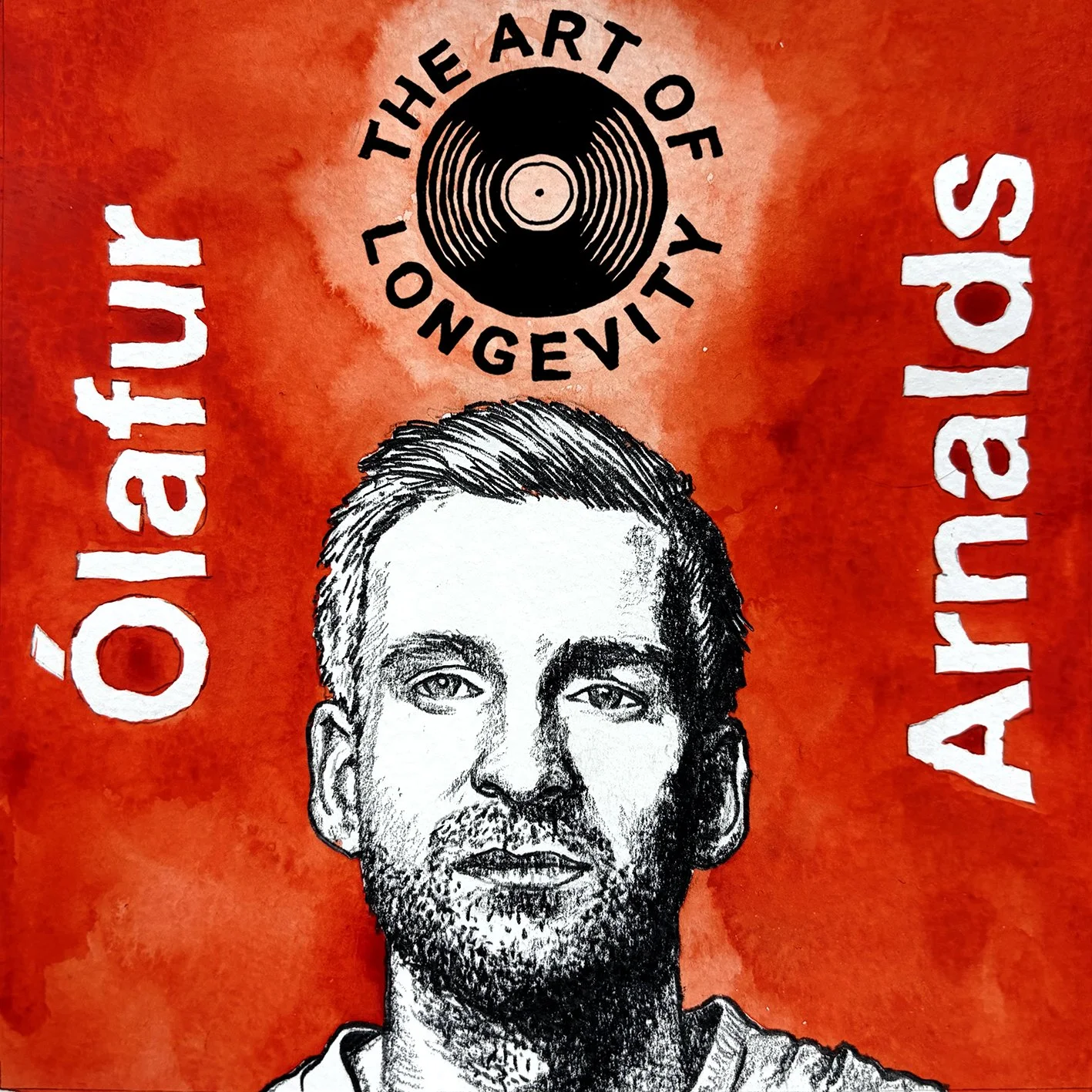
Season 13, Ep. 1: Ólafur Arnalds on music with meaning and facing up to the creative dilemmas that come with “success”
After years of touring, Ólafur Arnalds made a decision: he wouldn’t return to the stage without fundamentally rethinking what a concert could be. His upcoming world tour Falling Apart Together aims to blur the boundaries between music performance, theatre, and storytelling. Rather than simply performing songs, he wants to use these shows as a narrative device—something that reveals, rather than conceals, the creative process.
Central to this is the idea of dismantling the traditional “layers” of performance (the lights, the distance between stage and crowd, the illusion of “the show”) and gradually expose what lies beneath: vulnerability, creativity, and ultimately, community. If transcendence is something you seek from live music, get ready to tremble:
“When you break that illusion of the perfect concert… and you start to see that behind all of this picture-perfect live show…is just flawed humans - that is when you get goosebumps. That is when the show reaches another level.”
At the heart of Arnalds’ creative philosophy these days, is a simple but powerful concept: listening as a ritual. “As we age, our relationship with music changes - not because music loses its potency, but because life crowds it out. Responsibilities multiply, attention fragments, and music becomes background rather than focus”.
I made my own effort to reverse this somewhat, by spending an uninterrupted hour each evening immersed in Arnalds’ music - for the week leading up to our conversation. As I made a point of telling him, this changed me. Heightened emotional sensitivity, even unexpected tearful moments, reminded me of music’s actual transformative power. Funnily enough, Arnalds himself turns out to be one of a few people that have recently told me about their own newly instigated listening rituals. In Ólafur’s case, this is an hour each morning listening to Bach with his son. But in the past five years, he has invited friends over to hear music through a new sound system he installed at home, the experience enhanced with a sip of whisky and very little by way of talk - mostly just listening. How I’d love to be at one of those sessions.
Arnalds own work is deliberately built to reward those who resist the trend towards music as a function, a utility to be consumed. He would rather reward deep listening by making music that reveals layers only when paying full attention. As we discuss, he sees himself very much as an album artist, and yet much of his success and his current status has come about through a presence on playlists - including the Spotify behemoth that is Peaceful Piano. When I ask him about this dichotomy, he speaks from a place of deep thought and experience.
“It’s very two sided. This allows me a lot of creative freedom as a musician and I can buy a new synthesizer etc. But it’s important to remember you can make music without these playlists or streams and it’s important not to always chase these things, because this is not why I make music”.
This is what fascinates about Ólafur Arnald's music - it operates on two levels: ambient enough to accompany daily life, but rich enough to transform when given full attention. It’s a duality that has played a part in his longevity - enough commercial success to unlock a continued creative freedom.
Despite the industry’s shift toward singles and playlists throughout his career, Arnalds remains committed to the album as a storytelling form. For him, music doesn’t exist in isolation—it lives within a wider narrative and story of each album: “The album is still our best chance to tell a story”.
I only found out recently that Arnald’s career as a phenomenally successful “post-classical” artist got going by accident, when he was invited by a post-punk band to add some instrumental elements to an album. Looking back on this early experiment, Arnalds questions how easily this one serendipitous success came to shape and even define his entire career. “I made that first album…it was kind of an accident. Why was my next album in the same genre? Who decided that?… That first one just set the stage, and suddenly you’re in this lane.”
He connects this to the broader concept of the “tyranny of ideas” [original essay by Nadia Asparouhova] where initial creative choices become invisible constraints. This plays out in extremis in commercial music, in which all three players; the industry, the audience, and even the artist themselves begin reinforcing a particular identity that seems to be set in stone from the first successful song, or album. For Arnalds, this is one of the greatest challenges to longevity: resisting the pressure to repeat what works, and instead continuing to evolve. It’s why his more recent albums have brought in a much wider palette of musical styles and in particular, his collaborations with a variety of extraordinary singers.
He has become something of a master collaborator. Yet, as he tells me, his most fruitful partnerships didn’t come from careful planning, but from chance encounters and genuine human connection. Their two respective managers tried to engineer a collaboration between Arnalds and Nils Frahm for many years, yet their project Trance Frendz only happened (in 2016) after the two met by chance in a bar.
This is one conversation in which I had to bring up the elephant in the room: generative music A.I. In this, Arnalds offers a perspective that is both pragmatic and hopeful. If AI takes over the production of functional, background music, he suggests, it may actually clarify what human artists bring to the table. In a world of infinite, algorithm-generated sound, authenticity becomes more valuable. “Music isn’t just a melody,” he says.
“It’s everything around it—the humanity, the story, the ritual. If A.I. fills up all the background playlists and the soundtrack to reality TV shows, that might push artists and audiences alike to rediscover what truly matters”.
In this, he is both optimistic and ultimately, probably right.
At least I hope so.