Ladytron have never followed a conventional path to longevity. That’s good, because there isn’t one. This band has worked through cycles - creative surges, enforced pauses, patches of momentum, a hiatus, and reinvention. The unglamorous realities of sustaining a working band across decades. Daniel Hunt has been through these cycles a few times and knows how to press reset. “Every record has its own story,” he says, adding, with understatement, that “every record has to involve someone having a breakdown.” Mmm, not this time however, with great results…
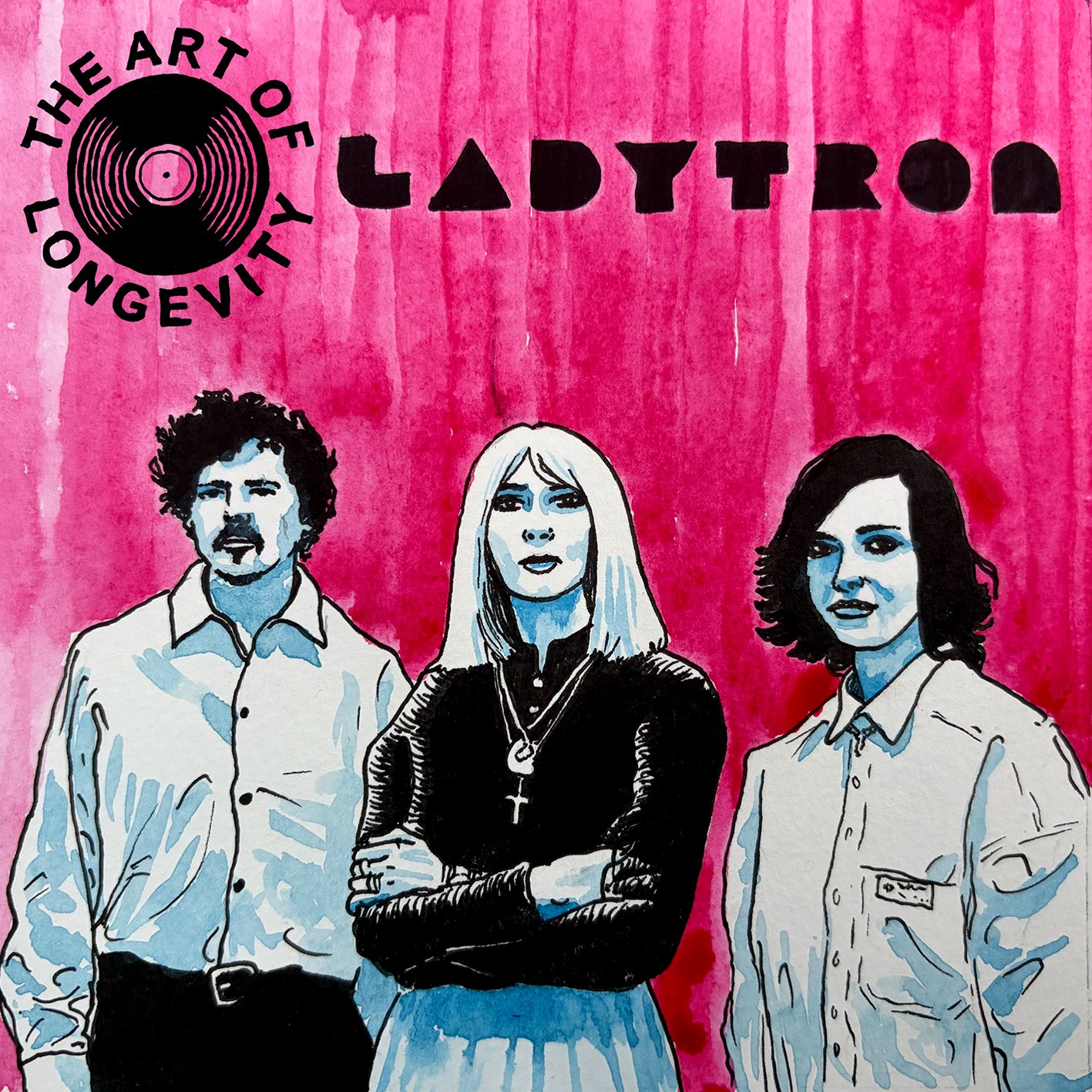
Season 13, Ep. 2: ladytron, on influencing those who influenced you
Ladytron’s eighth studio album Paradises was driven by the fun of the process, even if, for principal songwriter Daniel Hunt, the process inevitably also became obsession. When he insisted on collecting all the music gear he’s ever owned in one place, it gave me the picture of Richard Dreyfus (playing Roy Neary) in Close Encounters of the Third Kind, obsessively building the ‘mound’ that eventually called him to a meeting with extraterrestrials. It turned out well in the end (in both cases). But with obsession comes detail – attention to the craft that makes all the difference to an album – subtleties that we listeners may not even notice, at least consciously. In the case of Paradises:
“This album came with subconscious pedantic rules, that no idea is only used once, no sound is only used once, it must occur at least one other place on the record, so what you end up with is this lattice, a kind of symmetry. And even if nobody ever detects it, I know its there”.
For the first time in its 27-year lifetime, the band began writing “from a cold start,” without the backlog of ideas that typically accumulates between albums. That blank slate proved both intense and liberating. Hunt describes a rush of creativity - a lot of material coming together very quickly - a process that accelerated once the band made the track “A Death in London”, something of a centrepiece for an album of sixteen tracks. Even that long, it’s a record that never gets boring, but flows along to its own consistent mood. You might want to call it “lounge disco” (as opposed to the now ubiquitous kitchen variety). Definitely don’t call it “electroclash” (wtf does that even mean?). You might also call it “electronic all the time, disco occassionally”.
Even creative abundance came with its own pressures. Hunt describes reaching a point where he had to consciously step away, worried that the momentum might lead to a crash. “I had a little voice telling me…that’s quite enough,” he admits. Like Roy Neary, he just had to go through what we call these days, “trusting the process”.
After the difficulties of album number seven, Times Arrow (the process for that record bumped into the pandemic and became “a nightmare”), the band approached their new work with a simple but radical principle: “the emphasis on fun in the process.” This shift in mindset unlocked something deeper. And when producer Jim Abbiss came on the scene, initially as mixer but then more like 4th band member and producer, the band went back into Dean Street Studios with added session musicians to throw more into the record and make it that bit more special. “This record might have been our easiest to make, because no outside influence conspired against us. Nobody actually had a breakdown”.
In lockstep with a classic theme of longevity, Ladytron always refused to chase trends. Influenced by the past but not confined by it, the band occupies a space between nostalgia and futurism, electronic but human. It’s a recipe that that was built to last. Their creative process also reflects a broader philosophy about time and influence. Rather than trying to recreate the past, the band tap into the “shock of modernity” that certain records can deliver. It helps to explain why Ladytron’s music often feels both retro and futuristic. Hunt’s eclecticism is nicely complimented by vocalist Helen Marnie and Bulgarian-Israeli keyboard and occassional vocalist Mira Aroyo. Original founding member Ruben Wu left the band before the making of Times Arrow.
This conversation also revealed one of the real markers of success in making music - chart positions or streaming numbers, but something far more reciprocal: influencing the very artists who first influenced them. Hunt recalls the surreal moment of discovering that Neil Tennant had referenced the band in the studio himself, asking for a track to sound like “Ladytron.” Hunt also describes being thrilled to hear that Nick Rhodes was listening to Ladytron, a buzz given that Duran Duran had been his first true musical obsession and the first band he had been completist about. These encounters redefine success on more intrinsic terms: not money, not fame, but resonance - being noticed by those whose attention matters. To influence your influences is to quietly rewire the normal ‘hierarchy’ of inspiration, transforming idols into peers and closing the loop between past and present. In that sense, Ladytron’s longevity isn’t just about endurance, but about entering the cultural bloodstream - becoming part of the language of artists they once revered. The band if of course named after a song by Roxy Music, and Brian Eno has also been an exponent for this most eccentric of bands.
It’s a full-circle moment that collapses time, where influence flows backwards as well as forwards. Hunt reflects on the improbability of it:
“What would my 13-year-old self think if told this would happen, this recognition? It doesn’t seem probable. It’s the collapse in chronology. Everything is simultaneous now and no one knows the sequence of things anymore. So now you are actually competing with your influences. If you sound like Kraftwerk you are competing with Kraftwerk themselves, it’s not some notional misty thing from the past”.
So, a reconciliation between the catalogue and the new. A flattening of time that puts your music in the same arena as your influences. Hunt’s awareness of this has almost certainly bled onto Paradises. “When we began there was still the distinction between the past and the present. Remembering how we came to be with the sound of this record, it very much sounds like where we came from. It’s our pre-history in a way”.
So, in short, Ladytron seems to have stepped right into the sweet spot of “Brett’s Curve” (come on, you do know about Brett’s Curve by now, right?) - the point of career enlightenment. Serious fun.
When Nick Rhodes described Duran Duran’s 15th studio album Future Past – a return to form of sorts – he described a similar sense of arriving full circle. Now Ladytron have arrived there alongside Duran, Pet Shop Boys, even Danny Hunt’s other more quirky influences Stereolab and Neneh Cherry.
They all sit side-by-side as bands with electronics at the core but the human imperfections to give it the power to last it out, to survive and thrive.
Nick Rhodes would be proud.
Paradises is out now and Ladytron tour soon. Details here