LINE OF BEST FIT (WITH LAURA DAVID)
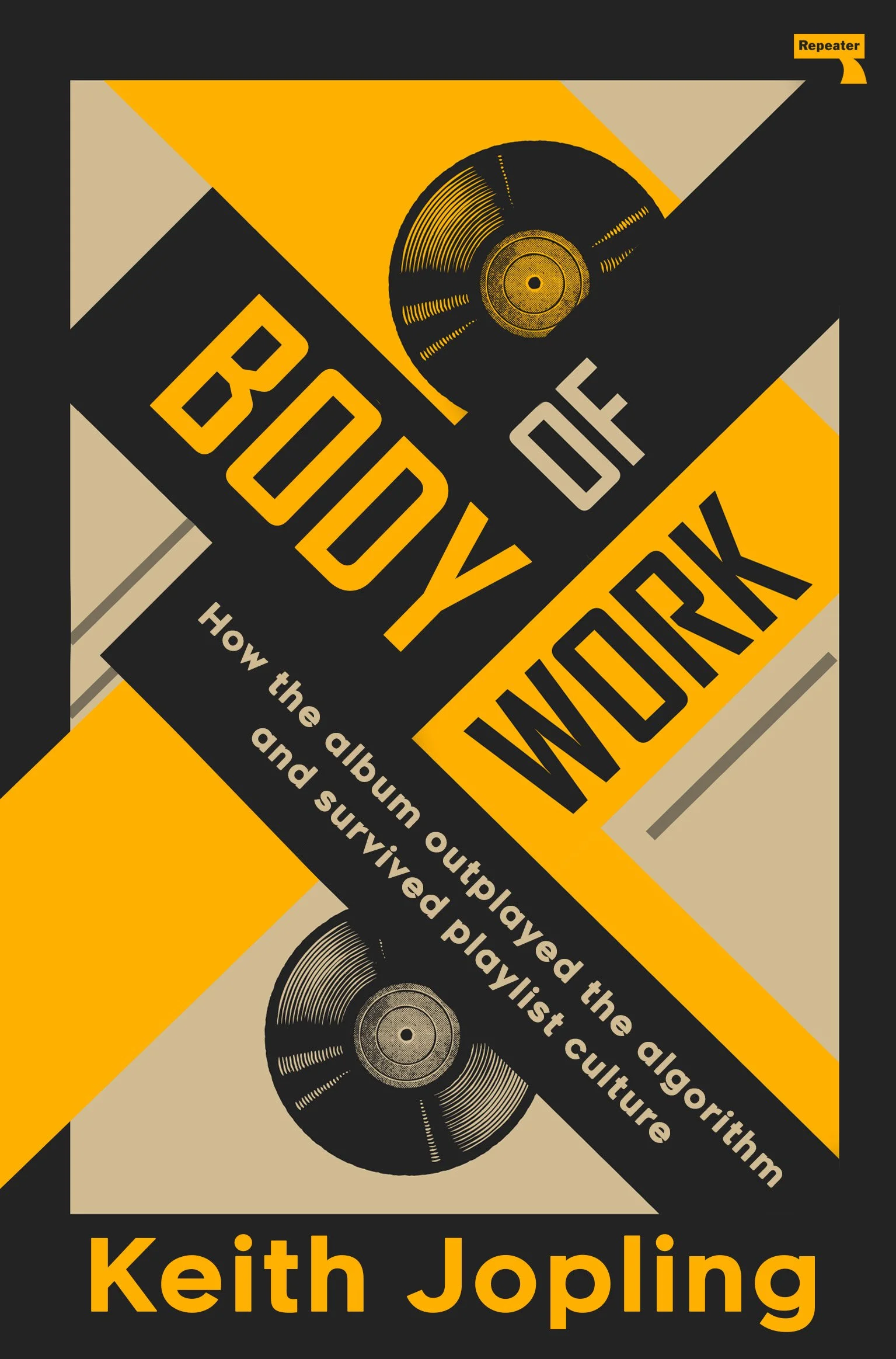
Today, we’re doing another fun Q&A, this time with writer and strategist Keith Jopling. I sat down with Keith a little while ago to talk about his new book, Body of Work: How the album outplayed the algorithm and survived playlist culture, which is out now. The whole idea of the book is unpacking why albums as a format have persisted. If you think about it, they don’t really make sense today. File sharing has made it such that music could, in theory, just be organized around individual songs. And, indeed, that’s what viral marketing tactics would suggest is the best way forward. But that’s not what’s happened. Against all odds, making a great album is still the goal of every competent musician. We still think of artists and their careers in terms of albums, and we still understand musical eras by the great albums that defined them. The form has persisted as the benchmark of success in music, despite technological innovations that threatened to render it obsolete. We all know that famous Jack Antonoff quote (from his appearance on the And The Writer Is… podcast) that sums this up quite well: “Album is God, period. There’s no brilliant artist that existed for a real period of time and changed things and has a real audience that isn’t based on album. They don't exist. I love singles. Singles are pathways to somewhere. Singles without great album is a long hallway that leads to nothing.”
Keith set out to figure out why this puzzling dynamic persisted. The result of that effort is Body of Work. Below, you can find the abridged transcript of our chat, which, as always, I should note has been edited for length and clarity. Many thanks to Keith for making the time to speak with me! Was great fun.
LAURA DAVID: So, we’re obviously here today to chat about Body of Work, your new book. It’s a short history of the album as a format, a business model, and a cultural pillar of the music industry. Just to get started on this, why was the album as a format and a concept the thing that you wanted to narrow in on?
KEITH JOPLING: Well, I actually ran a playlist site for a few years, The Song Sommelier, and spent some time both at Spotify and Sony Music. This was 2015 through to the end of 2021, and that was the three or four years when playlists were the thing just driving the entire business. And people have always told me that I’m a good curator or a good recommender of music, so I started a playlist site, and for about three years I did that and loved it. Then, for my 50th birthday — this story is in the book, actually — I got a turntable and set up a pair of old speakers. Slowly, very cautiously, I went back to vinyl and listening to albums. I just had forgotten how good that experience is. I was listening not only to my favourite old albums from the 80s and 90s, but also new stuff.
But as I got back into albums, I started wondering why they still existed. If you think about it, it makes no sense. We’ve had Napster, iTunes, Spotify, Tiktok, and we’ve got AI. Albums take years to make. They are expensive to make. We don’t know who’s listening to them, or whether anybody cares anymore. So, why are they still made? I just wanted to dive in and solve the mystery. And that’s how it got started.
LD: That’s honestly fascinating. And, as you say, it’s interesting that the form has persisted despite so many changes to incentivize the opposite. The album itself started as a technological innovation from Columbia Records, but now it has become a sort of artistic milestone. Writing and putting out an album is a defining pinnacle for artists to reach. Obviously, you go into this extensively in the book, but could you give me a brief explanation of how that all happened and why the dynamic has persisted?
KJ: I mean, number one on why the album has stuck around is the artists. But, if you go all the way back to the 20s, when the 78 was the first disc on which music was printed, people kept 78 collections like a photo album. So that’s why it was called the album. And then Columbia Records actually went and invented the 33rpm long-playing record, which allowed for over 20 minutes of music to be played per side. Thus, multiple songs could be included on a disc. Now, tech platforms have taken over the business and sort of turned everything into a content farm. But, the weird thing is that artists really respect the album. When I talk to up-and-coming artists, a lot of them say they don’t really feel like they’re real artists until they’ve made an album.
So, they’ve kept on making albums, despite record labels not really knowing what to do with them. A number of execs have told me over the years that they can’t figure out why artists are still making albums but that no one can seem to stop them. Obviously, marketing became, for a while, an entirely singles and social media focused operation. Everyone was hoping for, over the years, a spot on the radio, then a spot on a playlist, and then a viral video. All of that is song related. But, in recent years, the album has kind of come back, which is interesting to me.
I then went back to Taylor Swift’s folklore from 2020, which was the height of the pandemic, and its twin album evermore. To me, that was a real inflection point. During the pandemic, we went back and watched films, read books, and listened to albums. We had the time. And those two Taylor albums really won over critics and really played up the art of the format. I think because they succeeded so much, both creatively and commercially, she inspired a whole bunch of other largely female pop artists and helped bring a real wave of great albums back. Like, if you look at Rosalía last year, Lily Allen, Olivia Dean, and more really putting the album first, emphasizing that as a piece of creative work, both in terms of the songs, the cover art, the concept, taking it out on tour. It’s not only female artists, of course. We also saw this done excellently with Bad Bunny.
But, I do think Taylor helped bring the album as a holistic concept to a whole new generation of fans, which I think is really interesting because, as I write in the book, companies like Spotify weren’t always friends of the album. Often, tech companies have been obsessed with pushing other formats. This was only the very first year that Spotify Wrapped had albums in its roundup, which I assume must have been an algorithmic thing. It must have come up in the data for them to want do it. And, personally, I think that’s because younger audiences have gone back to albums as a format.
LD: So, that was my next question for you. I do notice that albums have really become a cultural touchpoint again. People are going back to iPods, they’re taking pride in building vinyl collections, they talk about their favourite records as key pillars of their identity. There’s a real reverence for enjoying and understanding albums, especially among young audiences, despite those being the audiences that have grown up in this short-form content landscape. Do you have any idea as to why that confounding trend has occurred?
KJ: Well, I think the word reverence is a good one. I also just feel it’s a bit of backlash against the online world and people taking back their own attention, their own time, using their own power of choice. It manifests in so many ways, like young people going to the cinema or shopping in antique stores. It’s a little bit of protest, maybe.
There’s also a little bit of patronage, wanting to support artists and so they’ll listen to or buy the whole album. I think they’re also realizing that artists and careers are defined album to album. If you look back at a catalog — or just the musical canon — that’s the way it is. Generational artists are defined by more than their top five songs. And as younger audiences discover catalog artists, they’re realizing there’s this whole reverence and almost mythology to the album. It’s really interesting to me that album listening is younger and more mainstream than it ever was. People tell me now that CD sales are up, Gen Z are back into cassettes. It’s kind of been a slow burn realization of the pleasure of listening to albums, which, again, has come from high profile artists just making really great ones and putting them in front of people.
LD: I do sort of resonate with what you said about it being a bit of a backlash to the current lack of attention span, short-form-everything world we live in. It does feel a bit like you’re reclaiming mental and cultural space that it’s very easy to rip away these days. Now, this might seem fairly obvious, but to spell it out, what do you think an album gives an artist in comparison to said artist just putting out a string of singles or EPs?
KJ: It’s that clear opportunity to tell a story, right? The Lily Allen thing is now pretty infamous, but it’s really ingenious the way she told that story of being cheated on and her whole breakup. It was a new take on the breakup album, many diverse musical styles strung together by a strong narrative, and characters like Madeline driving it forward. It was superb. That’s just one example, though. Rosalía did it with the neo-classical pop record she just put out. Again, it’s a way of standing out. You could say the same about Wolf Alice, Harry Styles, Olivia Dean. Also, something many of them have done is go back to earlier eras, like the 70s. Artists want to record in the studio using vintage instruments, great players. And I think that’s their own way of saying, “Look, I’m an artist, I want to make a difference and be part of the legacy and stand on the shoulders of the giants I respect.” They can do that with this format.
LD: So, if you had to point to the things that still make for a great album, what would those things be?
KJ: Spending more time than ever on song selection and sequence is important. In this day and age, you are writing more songs, you’re making more versions of songs, you keep cranking out singles, all of that stuff. But then the album is the definitive statement of your career stage and your interests. It’s a bit like what Harry Styles has tried to do. His latest is a good example. If you consider yourself to be a serious artist and you’re getting to be three or four albums in, you want to go and try and make your Kid A or your Dark Side of the Moon. You want to take a creative left turn, step up and make everything bigger. The album is what gives you the opportunity to do that. But, you have to be really, super careful of song choice. It’s eight to 12 tracks — go back to the classics and reference those. Don’t do more than that. Put them in the right sequence. Tell the story.
LD: I’m interested in this tech company angle. You talk a lot about platforms changing — and sometimes inhibiting — the music listening experience. What do you think the corporate relationship to the album has been?
KJ: It’s been varied on so many levels. I mean, I remember when I was at Spotify, I listened to a lecture by a techie on the history of music formats and the history of the album. I think he’d just gotten it off of Wikipedia that morning. I don’t think that tech people understood the album and why it was important. They thought it was a product that was invented by the industry. But it was really invented by the listeners.
There’s been an attitude of squeezing stuff into new pipes. At first, people couldn’t understand why the album stuck around. The engagement model is just about continuous listening, which doesn’t require albums and turns everything into a convenient stream. It was more lean-back, and, in that format of engagement, you don’t even know necessarily what’s playing as long as it’s a good fit for the mood, which can also make you listen to less challenging stuff. There was just this kind of attitude to make the incumbent industries feel old, like the old product was dead and tech was bringing the new product. But that is the antithesis of what music is supposed to be about. Music is supposed to take you on a journey and challenge you.
With tech, the desire to disrupt or invent often means they don’t really look at respecting formats and history and the reason why things are there in the first place. And, I think it takes them a while to realise why maybe they should lean into certain things. But, I do see them coming around.
LD: So, as you lay it out, the primary distribution channels aren’t necessarily optimized for albums, but artists are going to make them anyway. In that landscape, how does the form persist and continue to get better and continue to be important?
KJ: There are so many ways artists keep the form alive. One big one is listening parties. That’s the experience of doing something like putting your phone in a Yondr pouch, going into a dark room, and launching a record. Harry Styles did that for his recent record with listening parties across 40 cities. Just making the album experience an event and bringing it to life in as many ways as possible is a start. Or, doing other things like limited edition releases, acoustic versions, all of that. Turning albums into collectors’ items allows artists to push the boundaries of what is possible with the format and how to keep it relevant. Regardless, though, it’s always going to be those eight to 12 tracks that makes the biggest statement.
LD: Do you see any seeds of what a post-DSP, post-single-obsessed landscape is going to look like? Do you have any idea of what the sort of next phase of distribution is going to look like? Or do you just think that, like, no matter what the album is going to be King, doesn’t matter what the distribution channel is?
KJ: I mean, that phrase “post-DSP” has gone around quite a bit. And, I saw the interview that’s referencing — the Jimmy Iovine one — and it was taken a bit out of context. He was actually more saying that even DSPs are getting left behind in the fragmented attention economy. But, what I don’t understand, is that all of these platforms keep adding more and more and more. They then become somewhat enshittified because there is just too much. For a place like Spotify or Apple Music, early adopters came on to discover music, and if the DSPs stray too far from that, it gets worse.
That being said, if the prices keep going up and up and up, I think more people are just going to drop out and find alternatives and find ways to do without having literally all of recorded music at their fingertips. I mean, honestly, I don’t see necessarily a new version of what we’ve had before, because it’s almost like streaming was the ultimate. It gave us all music available all the time, whenever we wanted it, for a one-off fee. You can’t really go anywhere from there but back. So, that’s when I sort of look this phrase of “going back to go forward,” just in terms of enjoying the experience. There’s nothing wrong with going back.
There’s an anecdote in the book about seeing someone in a record shop buying a Miles Davis album and me wondering if people were going to be doing this in 40 years. And the answer is yes, absolutely. Progress is very subjective, and the tech industry definition of progress is already outdated. Most people are realizing that the idea of progress being getting something in as few clicks as possible or making life as frictionless and convenient as possible as being incorrect. People are just starting to see it as passe.
LD: I don’t know if you’re into Matty Healy, but I saw a clip from him where he was talking about how there’s a high likelihood that you won’t like your favorite album the first time you hear it. And his view is that that’s the way it should be. Basically, he’s saying you should have to wrestle with something to enjoy it properly. That’s been true for me so many times, and I think that’s partially what a great album listening experience gives you.
KJ: Yeah, there are really some nice subtle pleasures to that. I completely agree. I mean, I always say, listen three times. But, that’s the thing. Like, I would never do that on streaming, because there’s always something queued to come right after. With vinyl though, for example, it’s different. There’s a certain commitment there. There’s also certainly been albums in my life where I thought I didn’t connect really with them, and then I went back to it years later and realise it’s brilliant. And that is part of the experience of the format.
Now, though, it’s funny, because I’m 57 — so I’m not that young anymore — and I literally look at my shelf of albums, which is about 400 albums, and I think, Shit, how many more times am I going to get to listen to Ghost in the Machine by The Police start to finish? It might only be twice. So, I’d better get on and do it.
CAMBRIDGE AUDIO BOOK LAUNCH
Quick fire questions with Keith & The Orielles
On the night, we got to catch up with both Keith and The Orielles. Our Marketing Executive Parth, had a quick chat with them to get their thoughts on all things music.
Parth: "Is dedicated listening becoming more meaningful in a world of constant background music?"
Keith: "Yeah I think it really is. There is a backlash that's started already. People are putting their phone to one side, they're going to listening parties.. Listening parties have become one of the most important parts of the album campaign. And I think that's because the artist has worked on this piece of music for years, they've really thought about the sequencing, the concept etc, and now they want to unveil it to fans properly. Fans are having an experience which they've maybe not had for a while, or maybe never listened to a record in that way before, and they're telling people about it. It's a matter of time, it's just going to grow from here."
Parth: "You’re (The Orielles) previewing songs from your upcoming album Only You Left for the Cambridge Audio community. What do you hope people will feel when they hear it?"
The Orielles: "Ideally, what we felt, we're hoping others will feel, but that's not always the case. We've realised as soon as we release an album, it's no longer ours anymore. You have this sense of protection over it when you're writing it, especially because you conceptualise it so much. But then you hear new feedback from people post-release and it's always really refreshing because it's things we never expected to hear at the time. Hopefully people can sense some sort of progression in us as musicians since our last record, something we're conscious of when we're writing it."
Parth: "While writing the book, what surprised you most about how technology shapes the way we experience albums?"
Keith: "I didn't really intend for it to be a history book, but part of it is a rapid fire history of the album in the digital age. What surprised me about new technology, especially when it's so omnipresent and powerful, like streaming, where everybody's got apps and access to all the music. It feels like everything's changed forever. Big tech companies, which are more powerful than ever before, they've convinced old school media or the content business, that the album format is yesteryear's business. And what I realised is it's still there and now it's getting better and better. It taught me that technology is the transient thing. The art, the storytelling, the artifact, that's the thing that lasts forever."
Parth: "For us, sound quality is a big part of the experience. When you hear your music on a great system, does it change the emotional experience for you?"
The Orielles: "Definitely. I remember listening to test pressings all together on a great sound system and it being such a beautiful shared moment that we all really cherish. And same for new records that we're excited to hear, we love making sure we're listening to them in the best way possible, whether that be on some great headphones in quite a solitary moment or at a gig; hearing it the played as it was intended to be heard. I think one thing that can't be compromised is how great details can be. Us and Joe put quite a lot of thought into engineering and performance, and when you have really well balanced audio, nothing is too confusing, you really get a sense of what we're trying to achieve."
360 DEGREE SOUND: AUTHOR TALK
360°Sound: What were a few of the major reasons why file sharing and iTunes did not kill the album?
Keith Jopling: I joined the music industry in 2000 just as Napster hit. My job was to report industry data – the sales figures and format trends – for the International Federation of the Phonographic Industry (IFPI), the global trade body for the labels. For the next six years, I reported the figures going down and down. It was kind of doomsday for a while, because when Napster came along, it obviously atomized the entire catalog of music into hundreds of millions of files. People started downloading songs. Obviously, you could download the album as well, but most people were just getting the singles. And so that was the first declared death of the album.
When iTunes came along, it was kind of strange because Steve Jobs convinced the labels that the best way to tackle piracy was to sell single songs for 99 cents. That was an industry-sanctioned gutting of the album. So those two things came along after many, many years of the CD bloating the album because it could hold twice as much data. Albums were getting longer, and they had more filler. They lost that narrative thread that was really common in the ‘70s and ‘80s – the golden years of the album. Concept albums and things like that seemed like a thing of the past.
So, it felt like both the industry and music fans were ready to dispose of the format. That’s why I really focus the book on the 21st century, because I came into the business and watched all those technology companies come along. I wanted to solve the mystery of why it didn’t kill the album. When iTunes launched, a lot of bands started releasing singles only. Bands basically declared that it was the end of the album. Smashing Pumpkins were one of them. Frontman Billy Corgan was saying, “We’ll go back to the ‘60s, and we’ll release a track a week, or a track a month.” And the funny thing is that nobody really cared. The fans didn’t get it, and many of those bands quickly reverted to making albums. Gradually, from that period onwards, it became apparent that the album wasn’t going to die, but it had a long way to go before it got to where we are now.
Spotify has been more focused on songs and playlists than albums. You mention in your book that Adele asked Spotify to remove their default shuffle feature so that her albums would play through in the order she intended. Do you attribute much of the album’s endurance to artists’ commitment to the album format?
I do. After that experimental period where a few artists tried singles, it’s been the artists who kept on making albums. Why have they done that? Because even record label executives would say to me, “We’re not really sure what to do with albums anymore, but artists still want to make them.” Albums take years to make, and they’re very expensive, and we don’t really know who’s listening. But I think artists understand a few things. First, they get the fact that to make good songs, you have to write a batch of songs. And often, when they’re making albums, they have 50 to 100 demos or song ideas. They may have 20 to 30 really solid songs. But in the process of whittling that down to an album, they’re really focusing on the best songs they have at that period of time as well as telling a story and following a narrative. They’ve continued to want to do that, so artists have a lot to do with it.
But even so, during the streaming era, it was getting harder and harder to make an impact with your album because playlists became the thing of the moment. I talk about the growth of playlists in the book. Spotify helped increase their popularity with their branded, curated playlists, which nobody expected to take off in the way they did. And then along comes TikTok, which only added to the fragmentation. It went from songs to clips to sounds, but artists stuck with the album. I think their commitment to it is extraordinary, and I think it’s hard to quantify the impact of some of this, which is part of the mystery and the fun.
When Adele tweeted to Spotify in 2021 to turn off the shuffle function, it was a really big event. She wanted people to listen in order. Artists spend a lot of time thinking about the sequence of the songs. So that is completely understandable. What’s really curious is that no one knows when Spotify turned that shuffle function on, because it was for every album. I guess maybe one day I’ll find out who did it. Was it an engineer in Stockholm who wrote a line of code and messed with the entire history of recorded music? It’s extraordinary that the labels didn’t step in to stop it, but Adele did, and I think that was one of the key events in the survival and revival of the album.
New albums often get lost among the thousands released to streaming each day. What do you think artists and labels can do to generate more attention for their album releases?
I think a lot more than they’ve been doing, and I think they’re coming round to it. There’s a new Harry Styles album coming out, and obviously, that’s a huge event. He’s launching the album with listening parties in 40 cities around the world. If you go back to Harry’s House, his last record, in 2022, he launched that LP with an article in Homes and Gardens magazine, which I thought was pretty cool. Get outside of the music business, do something different, and generate some publicity around that.
In the intervening four years, I have heard from label execs about this continued push for the album by artists. You’ve got to give a lot of credit to big female pop artists like Billie Eilish, Sabrina Carpenter, Olivia Rodrigo, and Lana Del Rey. Together, they have introduced the album to a whole new generation of fans, and they’ve made the album the centerpiece of their campaign. It’s been the artist initiatives, but the labels are responding. They’re releasing many different versions of the album.
I’m starting to see huge posters of album releases, so they’re going back to old media and presenting the album through many different parts of the press. But it feels like there’s a lot more that they can do. Get behind artists who are doing album anniversary tours. I think they can lean into some of the amazing stuff that’s going on with alternative formats like cassettes and the CD, not just vinyl colorways. Do more immersive experiences and listening parties – things that help make the album an event. We have Record Store Day coming up; that’s a big one. In the UK, we have National Album Day in October. The record business has been getting behind that more.
What is your main hope for the book?
I heard from a reader who went out and bought a whole vinyl setup – turntable, speakers, the lot, and has gone back to vinyl. There were a few cases where people read it, and they told me they’ve gone back to their favorite albums. They’ll say, “I’m going to put it on and listen and put my phone in another room, just to see what that’s like again.” It’s fantastic that people are reading it and enjoying it. It’s meant to be a rapid read. It’s got a lot of different themes in there and a little bit of anecdotal stuff and a lot of industry insight. But if it encourages people to go back to listening, I am absolutely delighted.