Can a band make their best album on the 10th attempt and after 30 years, give or take a hiatus? I think Idlewild just did. I know you won’t, but give it five plays and tell me this isn’t a wonderful album. Idlewild got to ride the rollercoaster, although the “stratospheric rise to the top” was kept well in check, very much for the better in the long run. Frontman Roddy Woomble explains all.
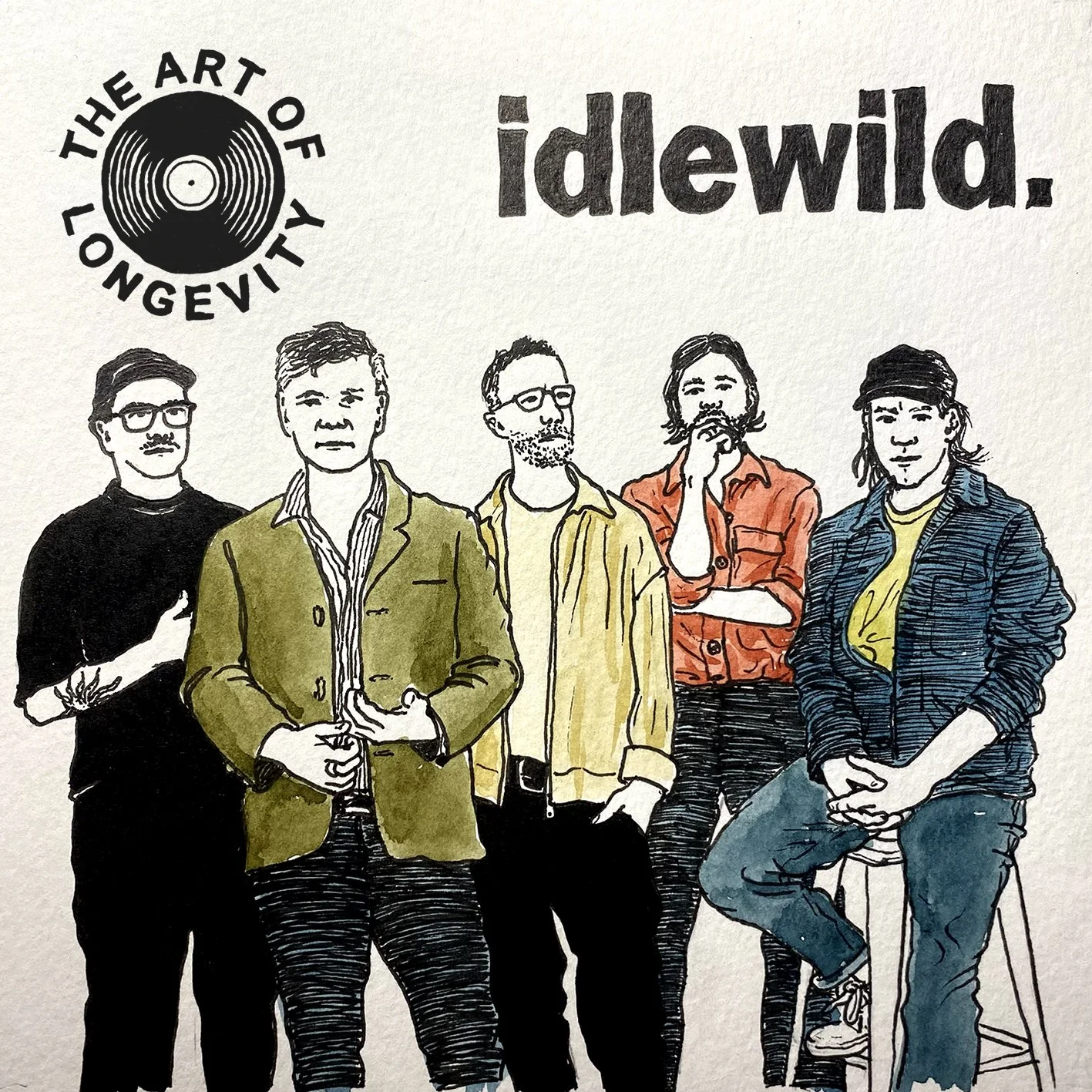
What was the last record you bought in a record shop, purely on the basis that it was playing right there and then, in the store?
Roddy Woomble’s last spontaneous LP purchase was Cameran Winter’s 2024 album Heavy Metal. Mine was Idlewild’s recently released self-titled album, the band’s 10th. It was playing in Banquet Records, Kingston Upon Thames, on the release day and I loved the sound of it - an old school indie guitar rock record that is and will remain priceless. Or in purely transactional terms, well worth 25 quid of your hard earned cash money.
It led to me seeking out the band’s PR to invite Roddy onto the show. Meanwhile, the album is up there with my top picks for the year. It’s an album Roddy and the band are certainly proud of. With the reviews of their career, the band have joined a club of “old bands” making their very best work, still. What a beautiful thing it is.
“The last record was put out on our own little label. This record has been released [by V2] with a little more infrastructure behind it. But I do think it’s a very fresh, strong collection of songs that recognises our past - which is why it's called what it's called, but there is something new about it too. We’ve brought a lot of new ideas to these songs”.
Emerging from Edinburgh’s music scene in the mid-1990s, Idlewild carved out their place in a British rock scene choc-a-bloc with guitar bands (the halo of Britpop) through a combination of emotional intensity and literary edge. All of this is present in the band still, right down to new song “Back Then You Found Me” namechecking Dylan Thomas’s Under Milk Wood.
Their 1998 debut album, Hope Is Important, announced them as something more than just another Scottish guitar band. Their songs were tight, but angular, and threaded with Woomble’s poetic phrasing and a strong melodic core. Woomble’s vocal delivery is different - and if you want a parallel, we talk on the podcast about Eddie Vedder (whom Idlewild supported on a US tour in 2003), because both singers have great folk voices despite fronting rock bands.
Did Idlewild have the boom and bust fame of Brett Anderson’s “Stations of the Cross” career curve (on which this podcast is based, I remind you)?.
Of a sort, yes. Building on an acclaimed sophomore album (100 Broken Windows), 2002’s The Remote Part, Idlewild reached a classic creative x commercial peak. That album is perhaps still their most well known - a more expansive, anthemic sound without abandoning the sensibilities that had become their trademark. It contained bona fide chart hits, “You Held the World in Your Arms” and “American English” and set the band on the way to being one of the key British bands in the early 2000s.
But in a sense, the “stratospheric rise to the top” was kept well in check. Perhaps it was personnel changes (I haven’t counted but the band has had more than its fair share of bassists). They pivoted toward a warmer, more reflective style on Warnings/Promises (2005), incorporating folk influences and richer textures. It bridged the band to maturity and opened up their options but ultimately did not satisfy the major label they were signed to, Parlophone.
An arena tour with Coldplay somewhat exposed Idlewild’s “limitations” if you want to put it that way - not musically, but in terms of performance - the will and the way to take their show to the big stages expected by major labels.
“We don’t put ourselves across as an arena band. We never have been that. We didn’t seize that moment, but it turned out for the best in the long term as we continued to do whatever we wanted, rather than have to make The Remote Part over and over again”.
There was no meltdown, no drama. But major label life is what it is - both back then, and in the present time. “Our label mates were Kylie Minogue, Radiohead, Coldplay and Blur. We were definitely at the bottom of that pile”.
When Parlophone didn’t want to renew a new deal after four albums, it was time for the band to re-adjust. To Woomble, it was liberating - eventually.
“For Make Another World, we felt like we’d toured enough, we had a fan base. Then after Post Electric Blues (2009) we decided to take some time away. As a band we felt intact, but we also felt like we wanted to stay up at the level we were, not to end up just playing clubs. The music business was so strange then (2007), we ended up taking five years away and came back with a renewed sense of what we could do, creatively”.
Their string of subsequent albums, Everything Ever Written (2015), Interview Music (2019) and now Idlewild all have something to offer, and demonstrate the band’s refusal to stagnate. The one-two punch of Woomble’s poetic lyrics and Jones’s jagged, urgent guitar work still delivers something, if not unique, then most definitely a cut above standard indie fare - more depth, more emotion.
Few bands transition successfully from ragged punk-inflected rock to expansive indie-folk, but Idlewild managed it without alienating their audience or diluting their artistic character. In short, Idlewild’s career is a testament to thoughtful songwriting, evolution, and the enduring power of emotionally intelligent rock. Most definitely an interesting and quietly inspiring longevity story.
Idlewild is available now and the band is back on tour in 2026